Article
Systems Monitoring: The Essential Guide to Service Health & Uptime
Service Health Monitor - Real-time status tracking and synthetic monitoring benefits

On this page
In today's always-on digital economy, system downtime isn't just inconvenient—it's catastrophic. Modern systems monitoring, exemplified by platforms like TenthMatrix's Service Health Monitor, has evolved from simple uptime checks to sophisticated observability ecosystems that predict issues before they impact users.
The Power of Public Status Pages
Public status pages, like status.workstation.co.uk, provide transparent, real-time visibility into system health. Benefits include proactive customer communication, reduced support load (40-60% during incidents), trust through transparency, and competitive differentiation.
Synthetic Monitoring Benefits
- Catch issues before users do - Detect problems instantly, often before real users encounter them
- Global performance visibility - Test from 50+ locations to reveal regional issues
- Validate complex workflows - Monitor critical business processes end-to-end
- Proactive SLA validation - Objective third-party validation of uptime commitments
- Third-party dependency monitoring - Detect when external services fail
Real-World Example: Workstation Service Health Monitor
The Workstation Service Health Monitor demonstrates best practices with real-time dashboards, incident history transparency, uptime metrics, and multi-channel notifications (email, SMS, Slack, webhooks).
ROI of Comprehensive Monitoring
Organizations report 85% faster incident detection, 70% reduction in MTTR, 40-60% fewer support tickets, and 99.99% uptime achievement with comprehensive monitoring strategies.
Learn more: @balinderwalia
More technical articles
Big Prometheus at Scale: Pros, Cons, and a MoSCoW Map of Observability Tools
TenthMatrix rewrite of the Big Prometheus problem space: Thanos, Cortex/Mimir, VictoriaMetrics, M3/Chronosphere — plus MoSCoW across OTEL, Grafana, SaaS APM and more
WSL Vault Technical Deep Dive: Zero-Trust Secrets, Dual Control, MFA & Multi-Region HA
Technical deep dive: envelope hierarchy, dual-control workflows, MFA, leases, active/active multi-region HA, feature tours, and presentation chapters
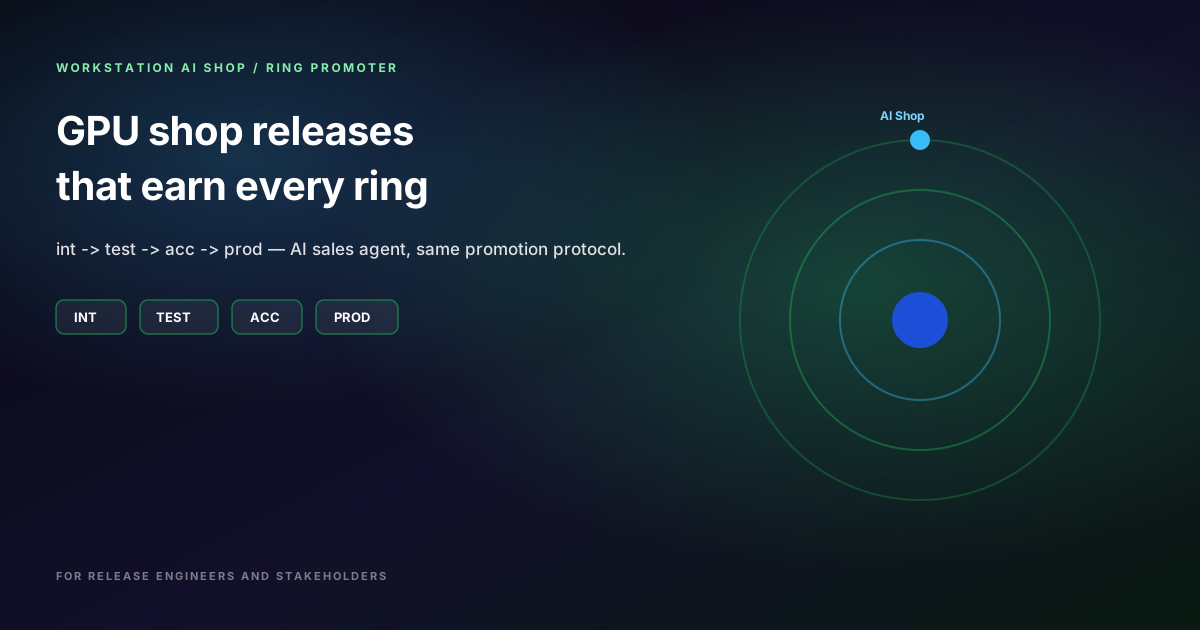
Workstation AI Shop on Ring Promoter: Orbit, Version-Verified Health and the Path from INT to PROD
Technical guide: shop Helm/CI mapping, Orbit semantics, version-verified health for the AI agent, secrets per ring, promote API, and a production checklist